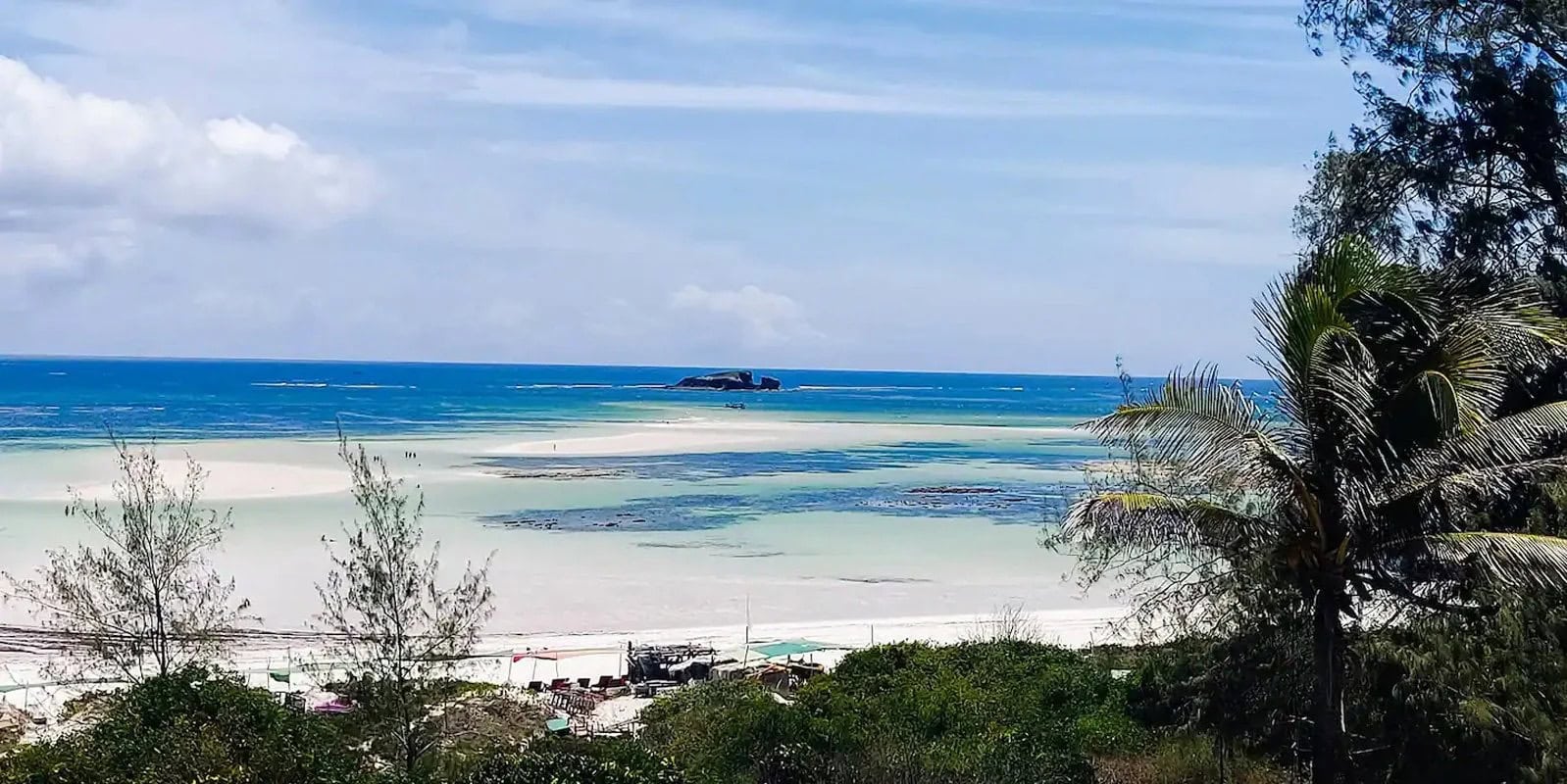
A white sand paradise on the Indian Ocean
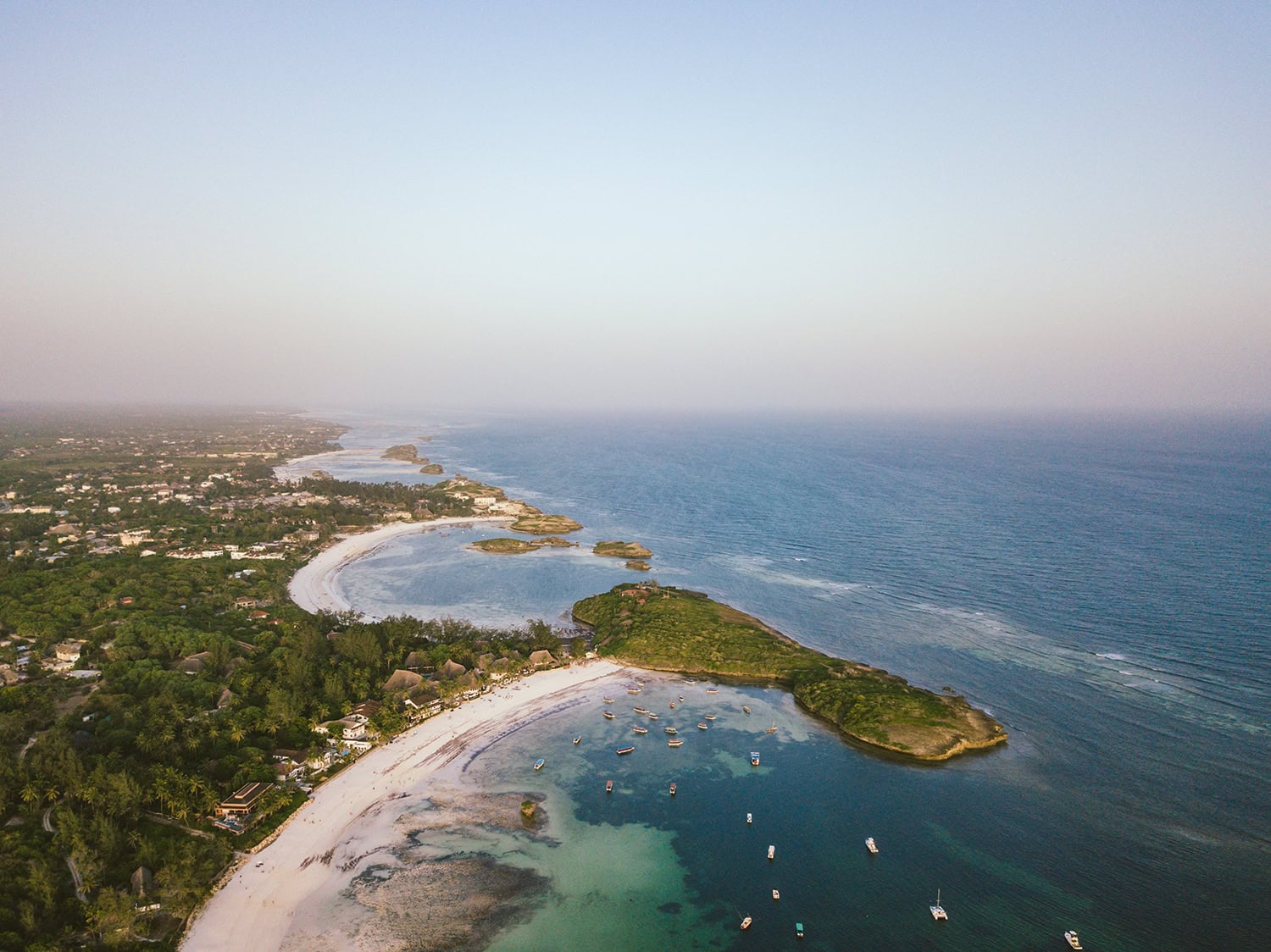
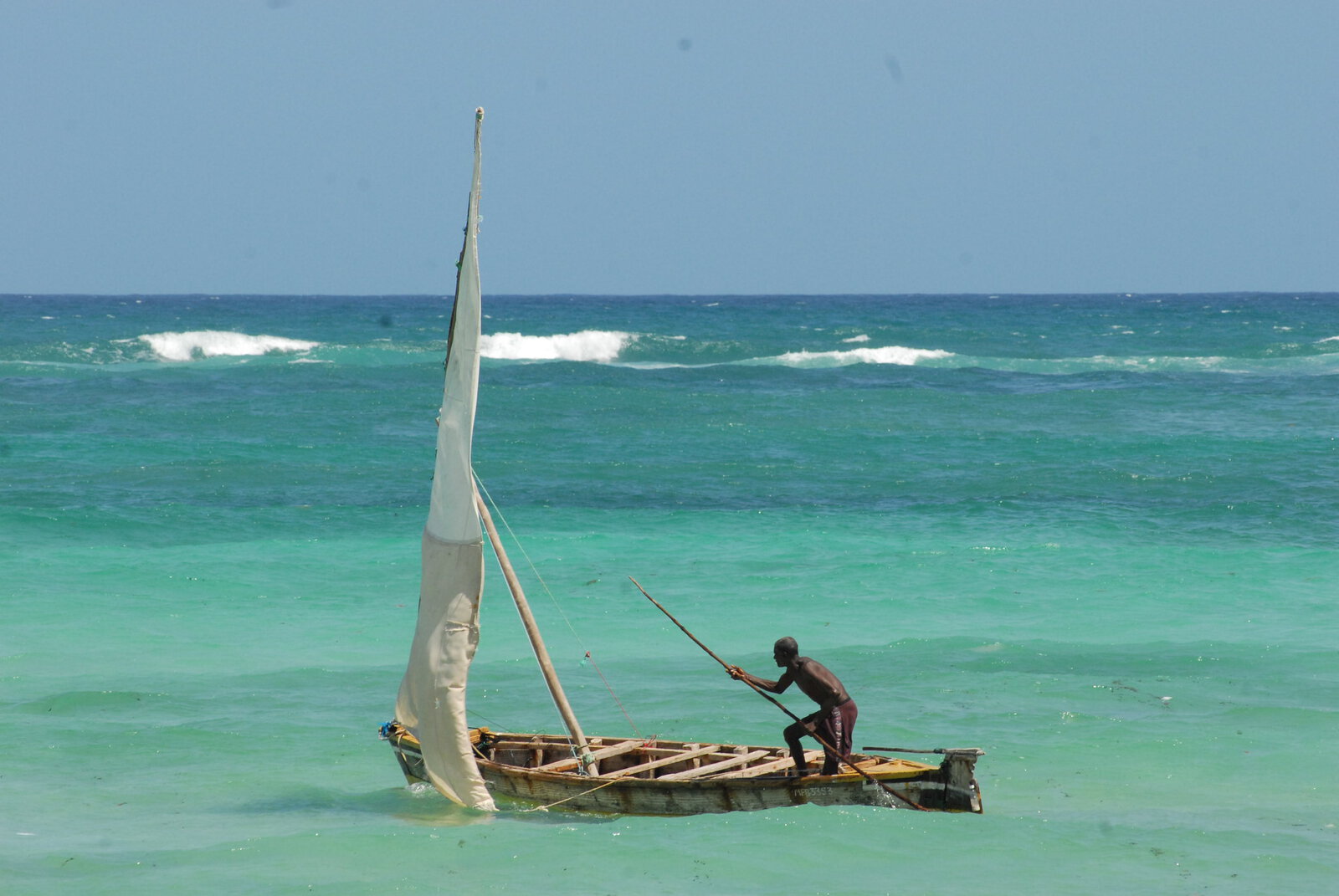
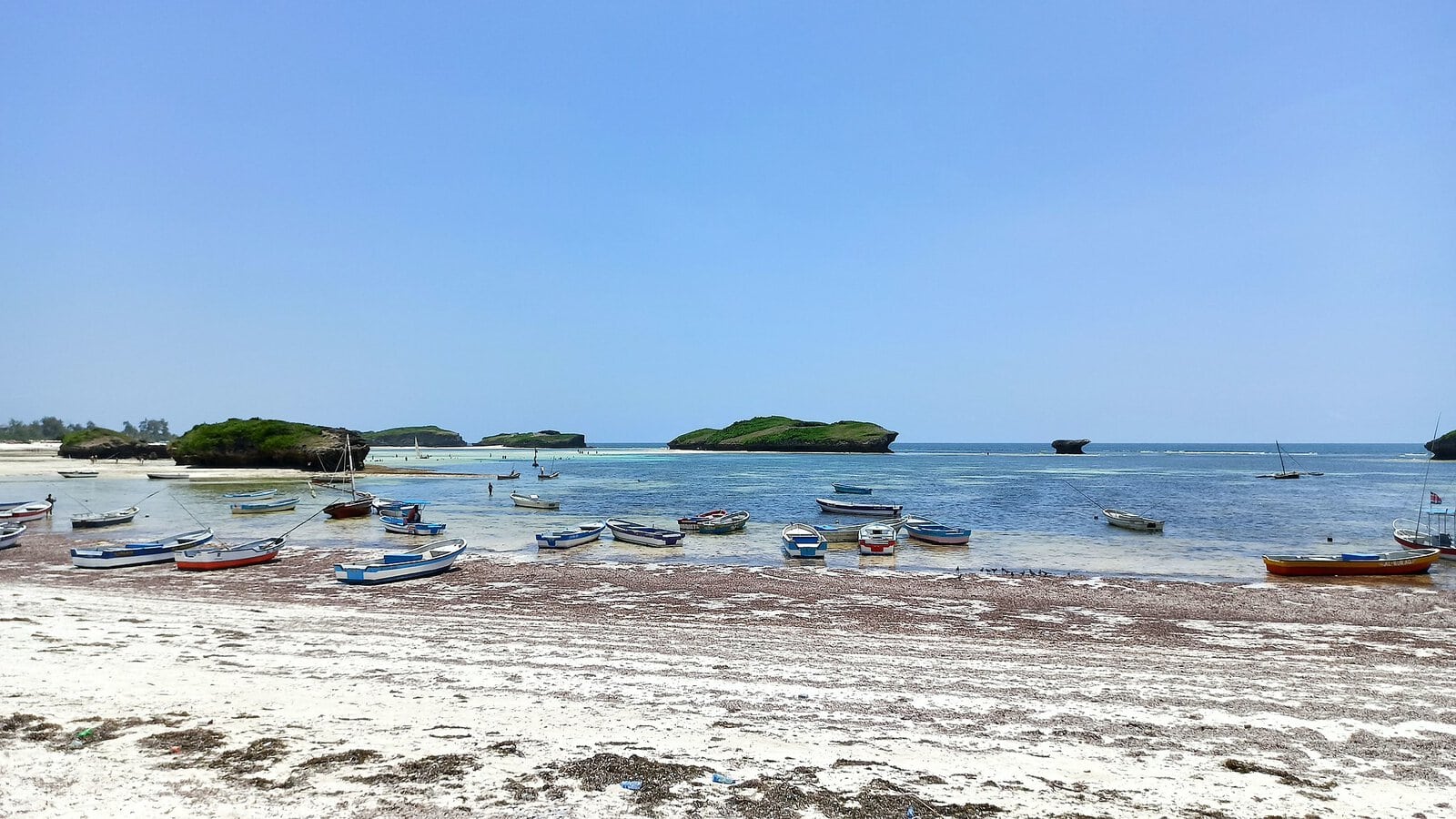
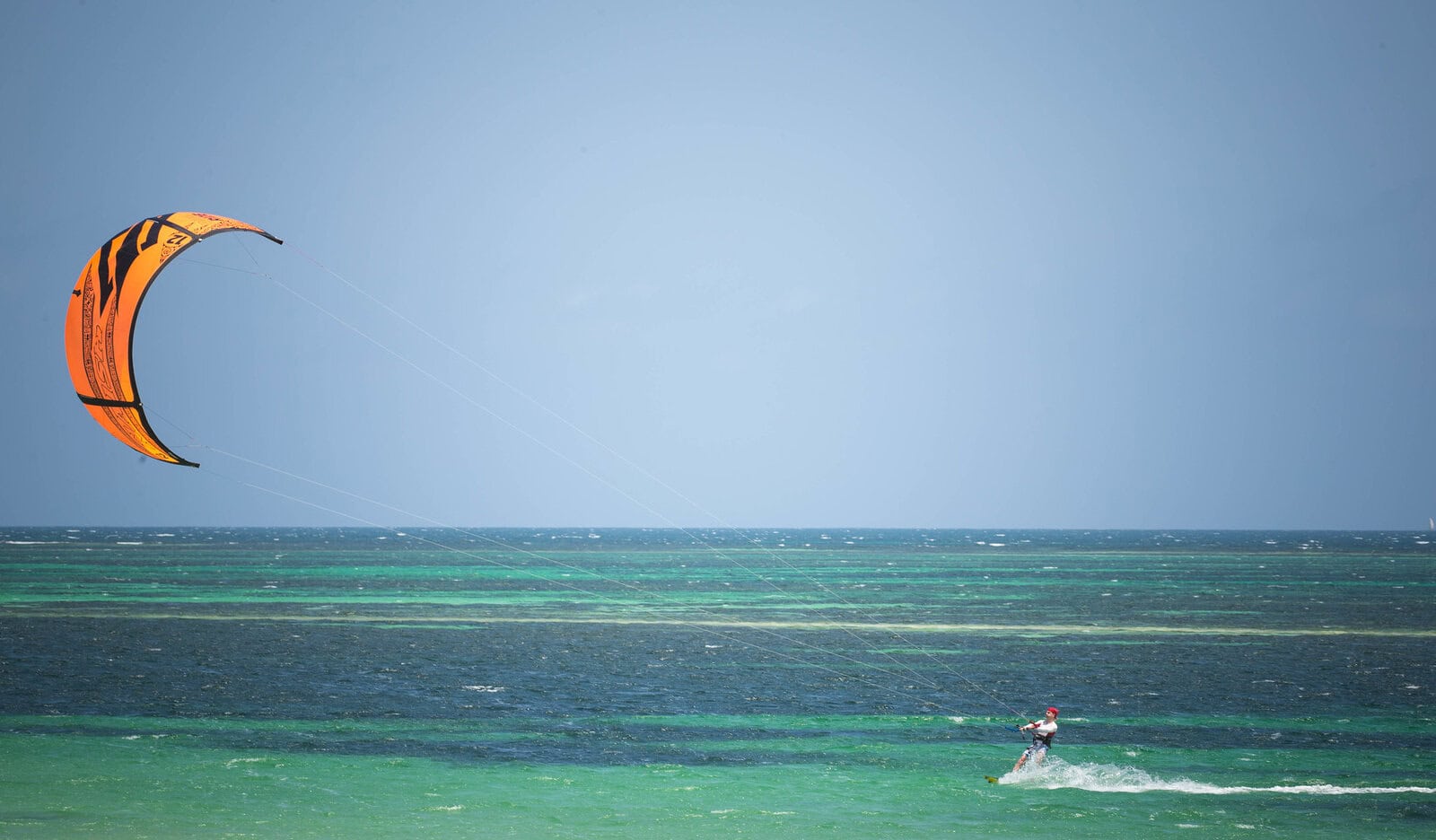
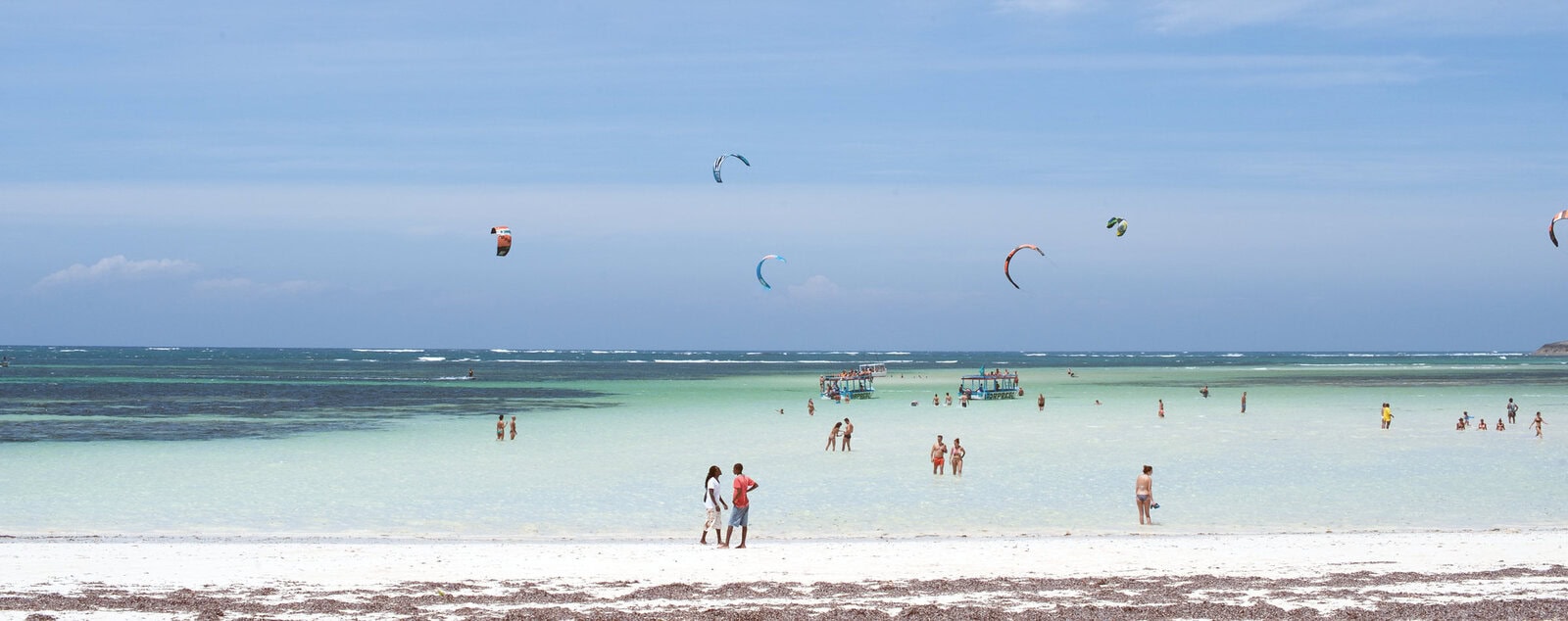
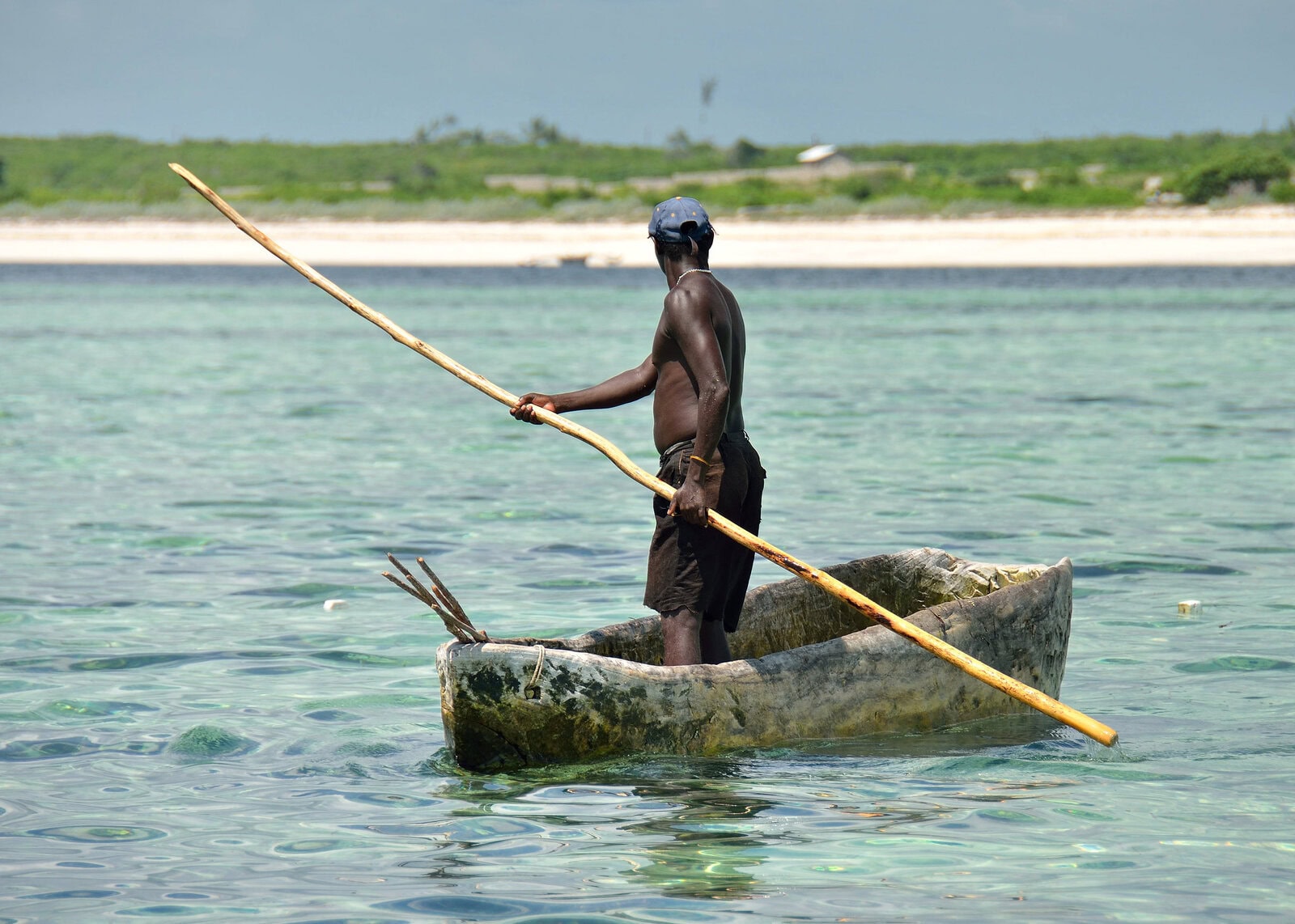
The fishing boats were already out when the first kites went up on Garoda Beach. That’s the rhythm of Watamu. Locals have been reading this stretch of the Kenyan coast for centuries, watching the same trade winds that now fill the kites of riders from all over the world. Watamu sits about 120 km north of Mombasa, tucked into a shallow bay on the Indian Ocean, and it has been pulling in wind chasers since the 1990s when a handful of travellers figured out what those two seasonal trades actually meant.
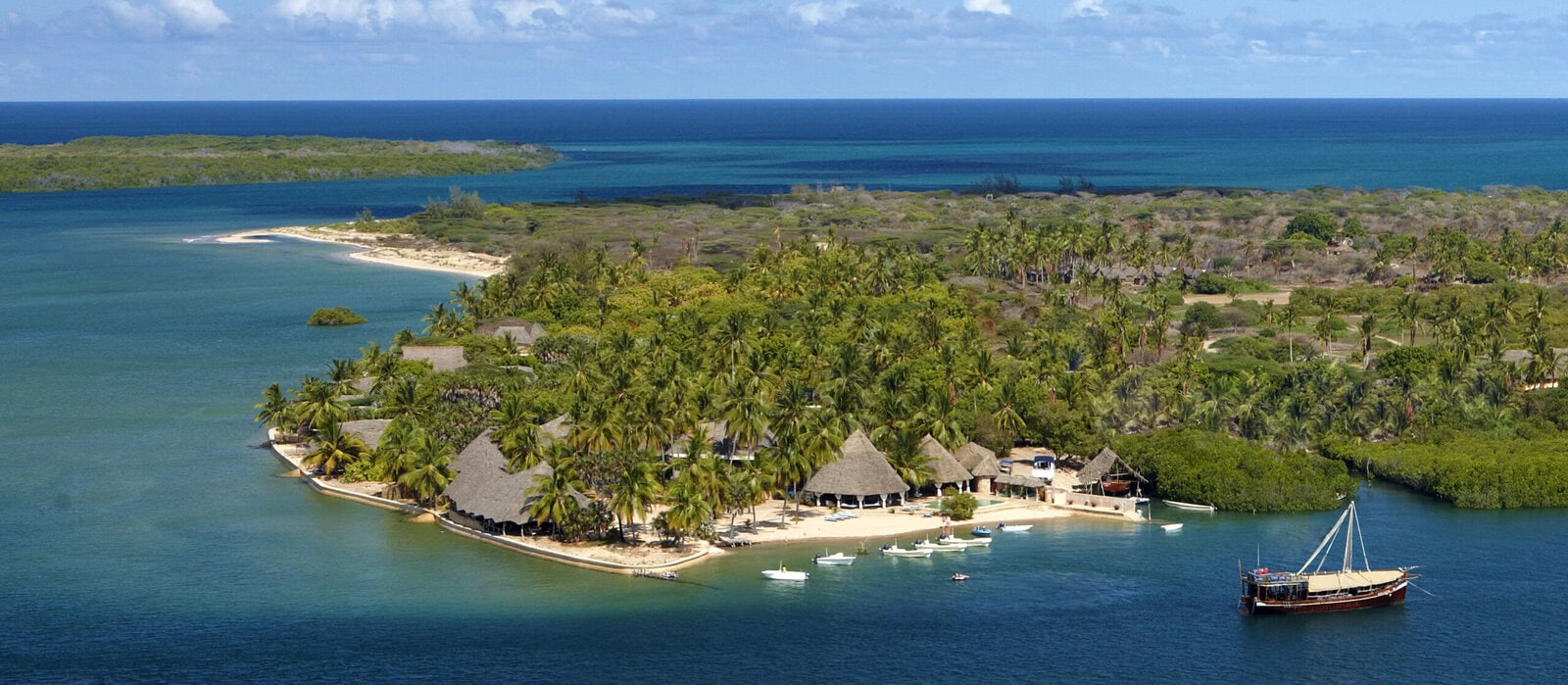
There are no five-star beach clubs or corporate surf camps here. It’s a small Swahili fishing community, a few Italian-run restaurants (the pizza is genuinely good), a cold Tusker for 170 shillings, and one of the most consistent double-season kite windows anywhere in the African tropics. The bay is framed by a coral reef about a kilometre offshore, which keeps the ocean swell out and turns most of the coastline into flat or near-flat riding water. The town also sits beside Watamu Marine National Park, a UNESCO-listed protected area of reef, seagrass, and open ocean. The reef at the northern end of the bay has nesting green sea turtles. Go in at dusk and you’ll probably see one.
Add the 12th-century Gede Ruins, Tsavo just two hours inland, and the Arabuko Sokoke Forest, one of the largest coastal forests remaining in East Africa, and Watamu starts to feel like two holidays in one.
Kitesurfing season in Watamu
Average Yearly Wind Speeds at this location in Knots
- January:
- 20 knots
- February:
- 22 knots
- March:
- 20 knots
- April:
- 17 knots
- May:
- 10 knots
- June:
- 22 knots
- July:
- 25 knots
- August:
- 25 knots
- September:
- 20 knots
- October:
- 8 knots
- November:
- 10 knots
- December:
- 18 knots
| Month | Average Wind Speed (knots) |
|---|---|
| January | 20 |
| February | 22 |
| March | 20 |
| April | 17 |
| May | 10 |
| June | 22 |
| July | 25 |
| August | 25 |
| September | 20 |
| October | 8 |
| November | 10 |
| December | 18 |
Watamu runs on two trade wind systems. Locals have been naming them for generations: the Kaskazi and the Kuzi. Between them, they give the bay roughly seven months of reliable, cross-onshore wind each year.
The Kaskazi season (December to April)
The Kaskazi blows from the north-east and runs from December through April. Wind speeds average 15 to 25 knots across the season, with December and January the most consistent before the energy eases off through March and April. It typically kicks in around 11am, so the morning is yours for a paddleboard session before the riders show up. By early afternoon, the 12m or 14m you rigged at dawn might already feel big. On stronger days, drop to a 9m.
Air temperature during Kaskazi regularly hits 36°C. Board shorts and a rashie is all you need. Bring SPF50 and reapply it, because the equatorial sun doesn’t give warnings.
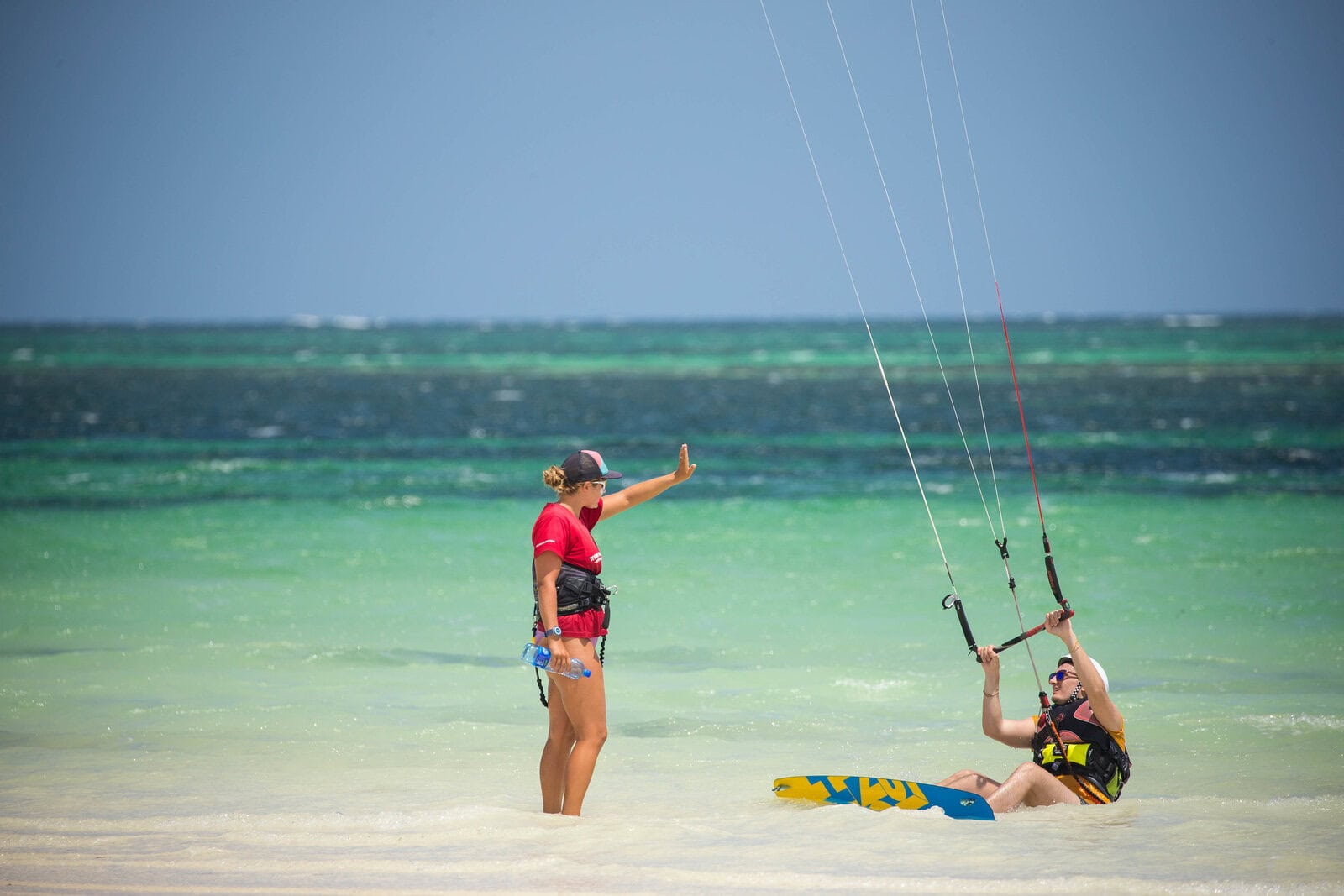
Kaskazi suits beginners and intermediates well. The wind is not as overpowering as the Kuzi, the cross-onshore angle keeps you safe if something goes wrong, the bay is flat, and the kite schools are running. If you’re learning, this is the season to book.
The Kuzi season (June to September)
The Kuzi is the bigger season. It blows from the south-east and arrives properly in June, building through July and August to its peak at 25 to 30 knots, with stronger gusts pushing through regularly. September starts to back off, but it’s still solid. This is the season that advanced riders book their trips around.
At certain spots, notably Silversands north of town, the Kuzi’s angle turns cross-offshore and kicks up real Indian Ocean swell. On the main bay, it stays cross-onshore throughout. The Kuzi is consistent in a way that feels almost mechanical. Once it arrives, it comes every day. There’s a building intensity to peak months that starts mid-morning and doesn’t quit until late afternoon. Your 9m or 7m is the right call in July and August.
Evenings are cooler than during Kaskazi, and it can rain at night. Pack a hoodie. Water temperature stays in the 25-28°C range all year, so a full wetsuit is never necessary. A shorty is optional if you run cold.
The transition months
May and October through November are the gaps between the two systems. Wind is light and unreliable, often under 10 knots, with occasional squalls. Not worth booking for kitesurfing. They’re excellent months for diving and snorkelling though. The reef is at its most sheltered, visibility is good, and Watamu is quiet.
Kitesurfing spots in Watamu
The bay stretches for roughly 5 km of white sand with several distinct spots spread along it. South to north, starting at Garoda. There are 7 main kitesurfing spots in Watamu.
1. Kite Beach (Garoda Beach)

Garoda is the home base. The kite schools are here, the kite shops are here, and on any wind day, this is where you’ll find boards leaning against fence posts and someone adjusting their bar in the car park. The beach runs about 5 km, so there’s space, even when it’s busy by local standards.
The water is mostly flat with scattered patches of coral visible at the lowest tides. They’re easy to spot and easy to avoid. At low tide the sandy bottom is very shallow for a good distance out, which makes it ideal for beginners. A wipe-out here is more embarrassing than dangerous. Wind blows cross-onshore from the north-east in Kaskazi and from the south-east in Kuzi, so you’re always pushed toward the beach, not away from it. This spot works on all tide states. During Kuzi, there can be a shorebreak at spring high tides, so check before you launch.
Kite sizes: 12-14m for Kaskazi, 9-12m for Kuzi, down to a 7m when it pumps in July and August.
2. Turtle Bay Sandbar

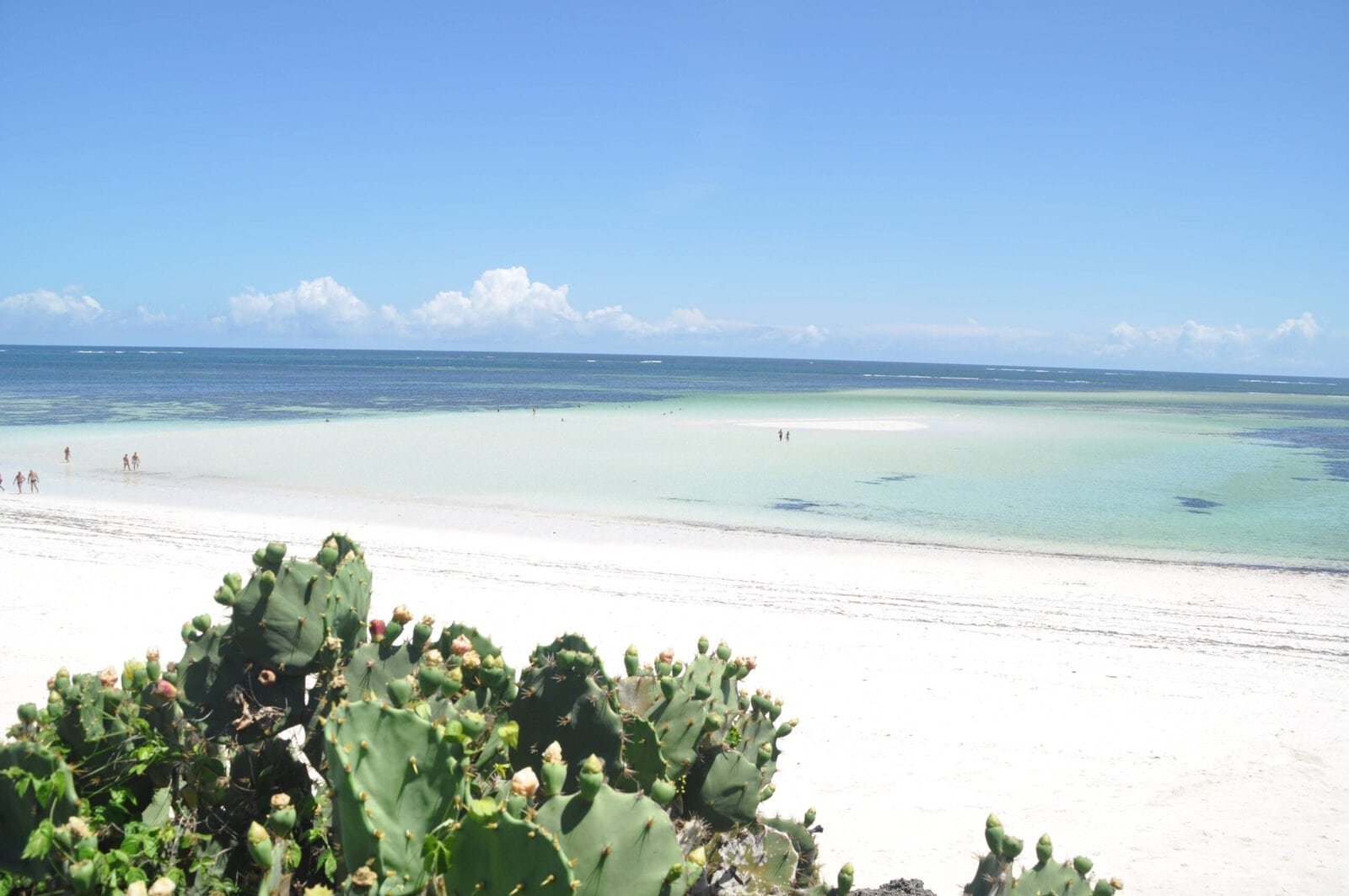
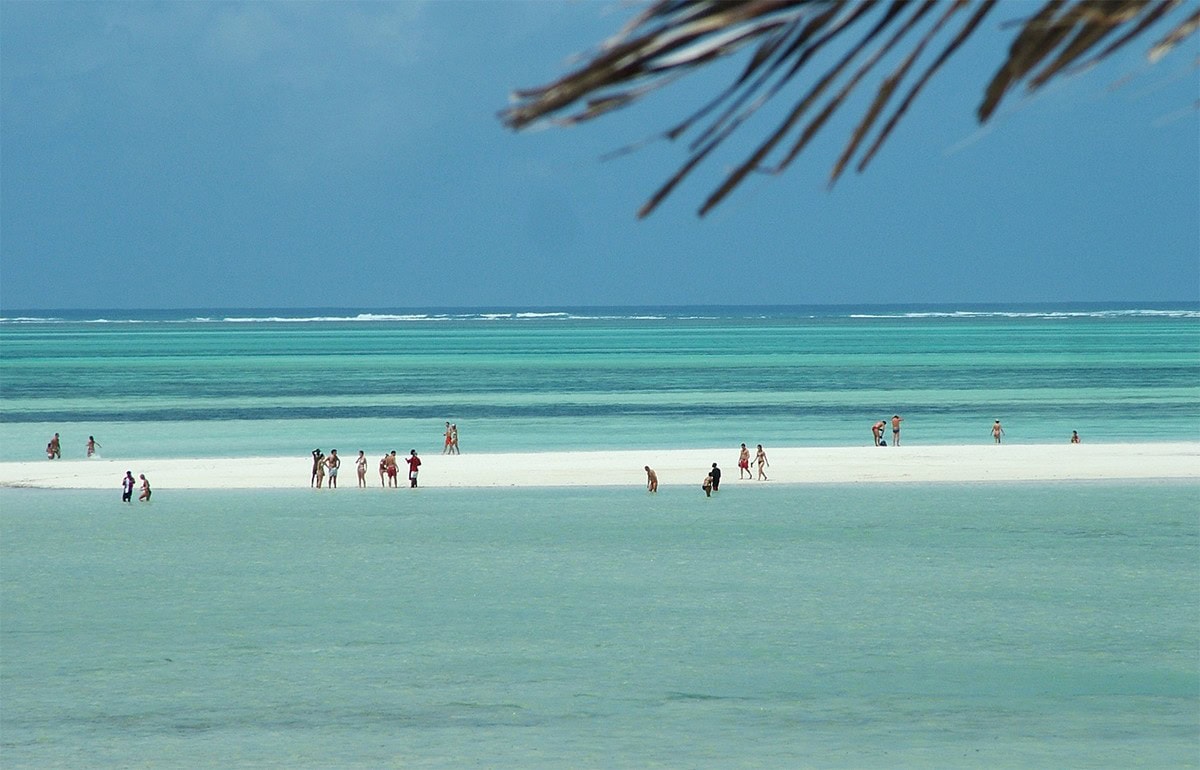
A short walk north of Garoda, Turtle Bay Sandbar is a seasonal spot that comes alive during Kaskazi, December through March. At low tide, the sandbar emerges and gives you a long, flat stretch of ankle-to-knee-deep water with no shorebreak and clean wind. Perfect for freestyle or first-time riders working on water starts.
Turtle Rock sits in the bay behind the bar, a distinctive formation that gives the spot its name and makes a solid backdrop for anyone shooting from shore. The spot works best three hours either side of low tide on both spring and neap. During Kuzi, waves occasionally push through from the reef, but it stays manageable for most skill levels.
If you’re on Kaskazi and want flat water with room to breathe, this is often a better call than Garoda on the days the main beach gets going.
3. Plot 40 Sandbar
At the southern tip of Kite Beach, Plot 40 suits beginners and freestylers equally well. The sandbar sits in front of the Gecko Resort, and the Tribe Watersports Pro Centre runs operations here, so there’s gear, support, and boat rescue available.
Conditions mirror Turtle Bay: flat water, sandy bottom, cross-onshore wind in both seasons. During Kuzi a small wave sometimes breaks on the back of the bar. The spot works best three hours either side of low tide. One thing to keep in mind: the beach here gets busier with swimmers and sunbathers around peak tourist periods. Watch the waterline when you launch and land.
4. Short Beach

Short Beach earns its name honestly. It’s a small cove tucked just past the rocky headland on the southern edge of Mida Creek, sheltered enough to feel like its own little pocket rather than a continuation of the main bay. Short on sand, yes. Short on character, no.
It works best during Kuzi. The water stays waist-deep on average, and there’s a rolling shorebreak that gives you something to ride on the way in. Not a proper wave by any stretch, but enough to feel like an upgrade if you’ve been on flat water all week. The wave at Short Beach is basically the kite equivalent of training wheels for surf: small, friendly, and a genuinely good step for intermediates looking to push past the sandbar before committing to somewhere more serious.
Wind here blows cross-onshore during Kuzi, same angle as the main bay, which keeps things safe. The water is shallow enough to stand in most of the riding zone, so if your kite drops, it’s rarely a drama.
Access is the tricky part. At low tide you can cut through the rocks from Garoda Beach along the shoreline, a short scramble manageable in booties. At high tide, take the long way around by road. Ask at any of the Garoda schools and they’ll point you right.
5. Mida Creek Sandbar

If someone tells you there’s a hidden flat water spot twenty minutes from the kite beach, inside a tidal creek surrounded by mangroves with sea turtles in the shallows, you go. Mida Creek is exactly that.
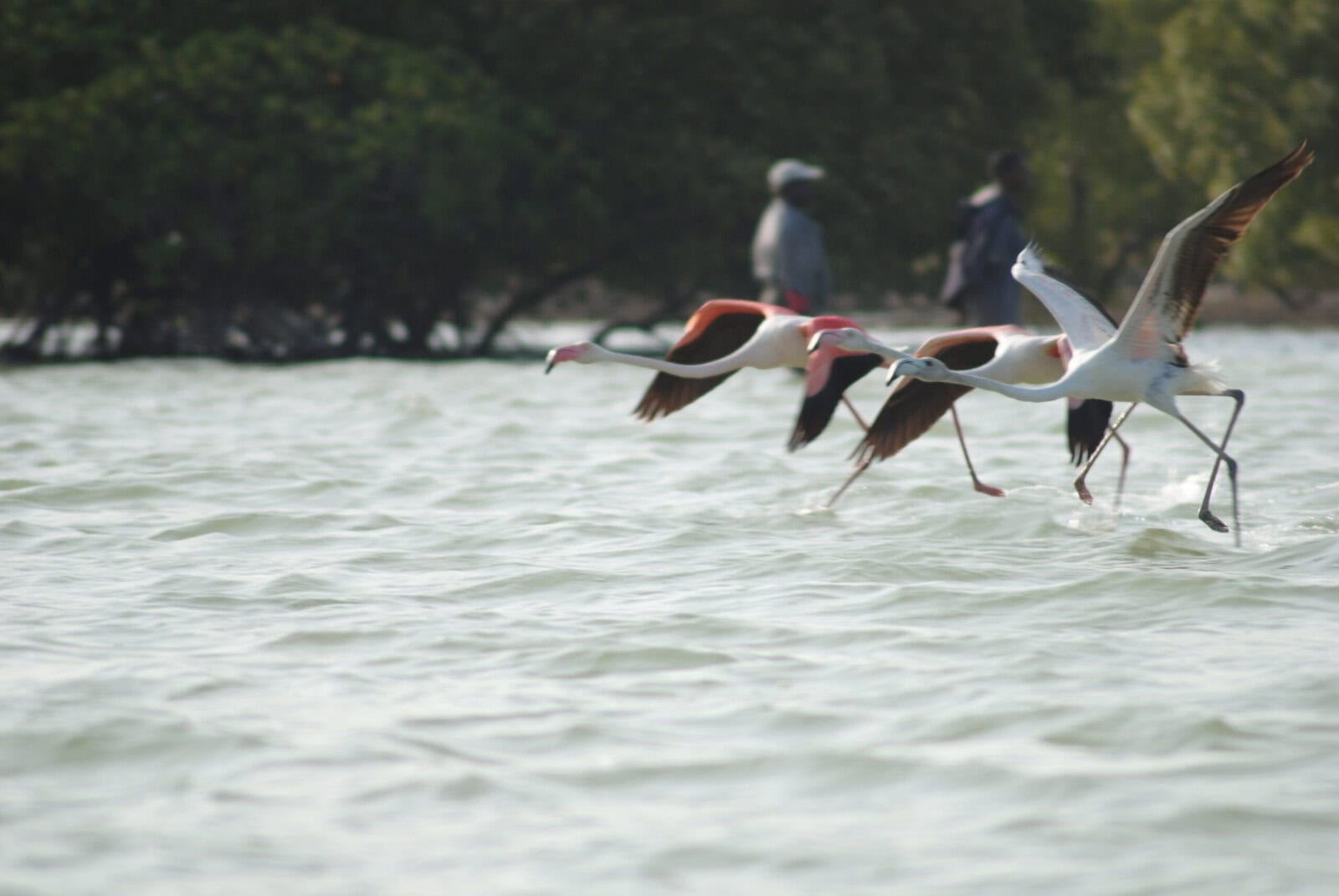
The creek runs inland from the southern edge of the bay toward the Arabuko Sokoke Forest. It covers more than 30 km² and is a protected marine reserve with dolphins, sea turtles, reef fish, and dozens of bird species including the rare crab plover. The sandbar sits in the heart of it. Getting out there takes some logistics. Talk to one of the kite schools on Garoda and they’ll sort a boat transfer or walk you in on low tide.
The riding is about as sheltered as you’ll find anywhere on the coast. Flat water, no ocean swell, wind funnelling through the mangroves, the occasional heron watching you from a branch. Best at low tide when the bar is exposed and the water is ankle-deep in places. The kite feels different here, quieter somehow, with the mangroves absorbing the usual beach noise. It won’t be the most technical session of your trip. It might be the one you talk about most.
6. Jacaranda

Jacaranda sits north of Turtle Bay, near the northern boundary of the marine park. The claim that it’s one of the world’s best flat water spots isn’t idle boasting. When the conditions line up, neap tide, low water, clean wind from either season, you get a wide expanse of perfectly flat, knee-deep water and almost nobody on it.
The depth at Jacaranda is interesting. There’s enough over the neap tide bar to throw proper tricks without touching bottom, but a bad landing just gets you wet rather than hurt. The reef runs about 2 km out, which kills the chop and keeps the surface clean. On a good day you’ll see maybe three people on the water. On a very good day, two of them are locals.
Jacaranda only works on neap tide in the three-hour window either side of low water. Check the tables before you head out. Showing up on spring tide to find no sandbar and messy chop after a tuk-tuk ride from the main beach is the kind of thing that ruins an afternoon. When it’s on, it’s one of the better sessions on the East African coast.
7. Silversands

Silversands is the odd one out. It’s north of the marine park, about a 20-minute drive from Garoda, and it only works during Kuzi. The south-east trade arrives here at a slightly cross-offshore angle, and because it’s not sheltered by the bay, real Indian Ocean swell reaches the beach.
If you want waves on a Watamu trip, this is where you find them. The swell comes from the south-east, the reef lets it build into long, clean lines, and the spot works best three hours either side of high tide. That’s the opposite tidal window to most bay spots, worth noting if you’re planning a day around it. One catch: Silversands only breaks properly when the swell is tracking SE. If it shifts more southerly, a headland blocks it and the waves don’t form. May through September the prevailing direction is SE, so your odds are good in peak Kuzi.
This isn’t a beginner’s spot. The cross-offshore angle shrinks your safety margin, and the unobstructed Kuzi wind can be powerful. Come with a smaller kite and ideally come with someone who’s ridden it before.
How to travel to Watamu
Malindi is the nearest airport, about 20 minutes from Watamu by road. You’ll transit through Nairobi, and Kenya Airways, Jambojet, Fly 540, and AirKenya all fly the route. Alternatively, fly into Mombasa and take the two-hour coastal drive north. Mombasa is often the cheaper flight option and the road is straightforward. Transfers from both airports can be arranged through your accommodation or kite school, and it’s worth sorting this in advance rather than figuring it out on arrival.
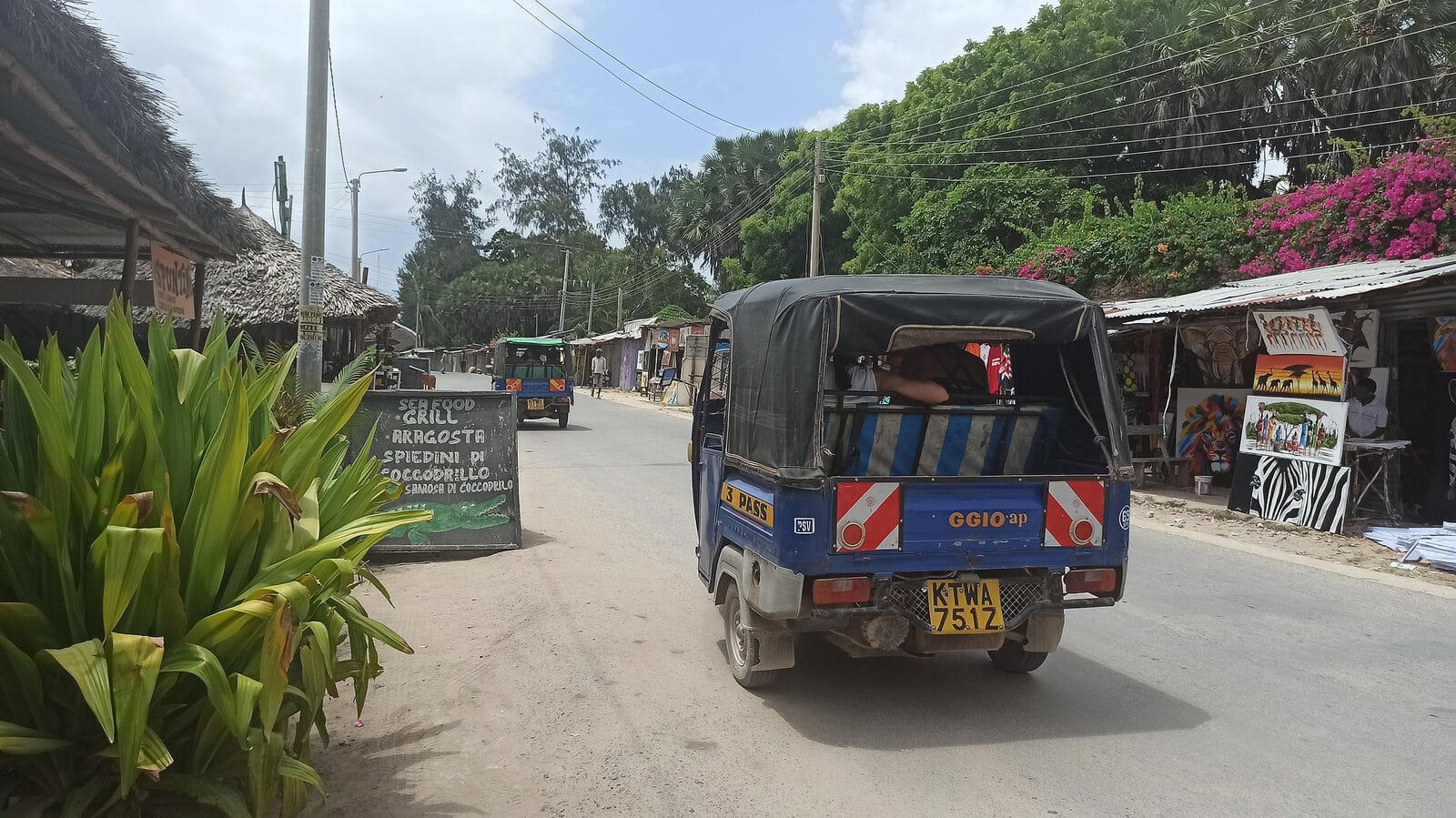
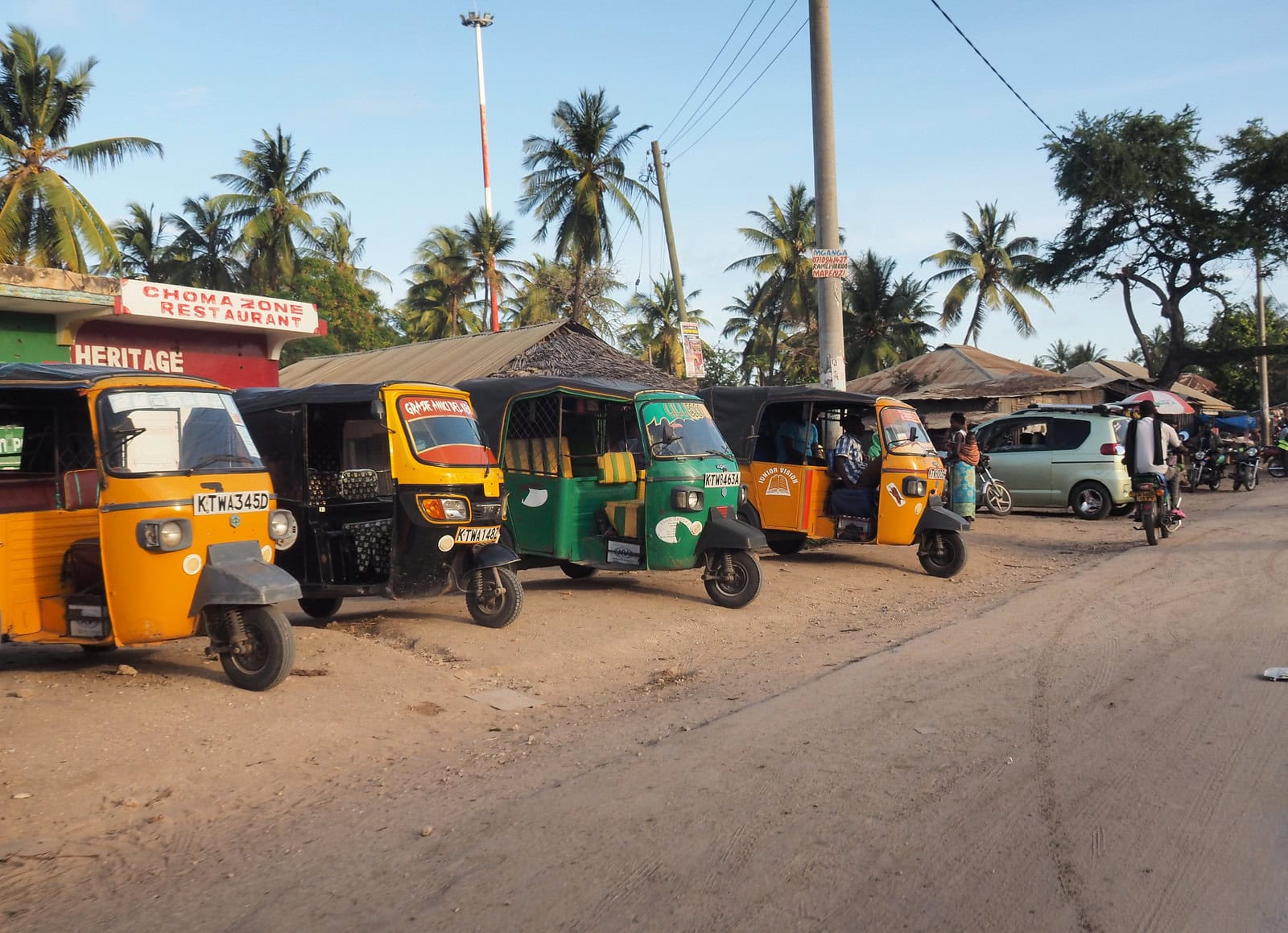
Once in Watamu, you don’t need a car. Tuk-tuks cover the kite spots for around 250 KSH, and bodabodas (motorbike taxis) run for about 50 KSH, cheap but no helmets provided. The tuk-tuks are the more sensible option for gear. For longer trips to Silversands or the forest, most kite schools can organise transfers. There are ATMs in town and dollars are accepted at most hotels and restaurants, but for the local bars and food spots, Kenyan shillings are what you want.
Everything in Watamu is close by, so you don’t need to rent a car to get around. Local vehicles, “tuk-tuks” and “bodabodas” (motorbike taxi), can drive you to the kitesurfing spots in the area.
No wind? Do Safari!
Watamu is one of the few kite destinations where a wind-free day doesn’t feel like a loss.
The Gede Ruins are 15 minutes from the beach by tuk-tuk. They’re the remains of a large Swahili-Arab town abandoned in the 17th century, reason still unclear. The structures are still standing, the forest has grown in around them, and there are colobus monkeys in the canopy above. Quiet, a bit eerie, worth a couple of hours.
Tsavo National Park is two hours by road. Tsavo East and West combined are one of the largest game reserves in the world. Most kite schools and hotels in Watamu can connect you with day trips or weekend safari packages. If you want a bigger wildlife leg, Amboseli, with views of Kilimanjaro, is also reachable from the coast with an overnight.
The Arabuko Sokoke Forest is 15 minutes from the centre of town. There’s a watering hole inside that elephants visit regularly, especially in the dry months. Dawn or dusk gives you the best chance of seeing them. The forest is also one of the better birding sites on the East African coast.
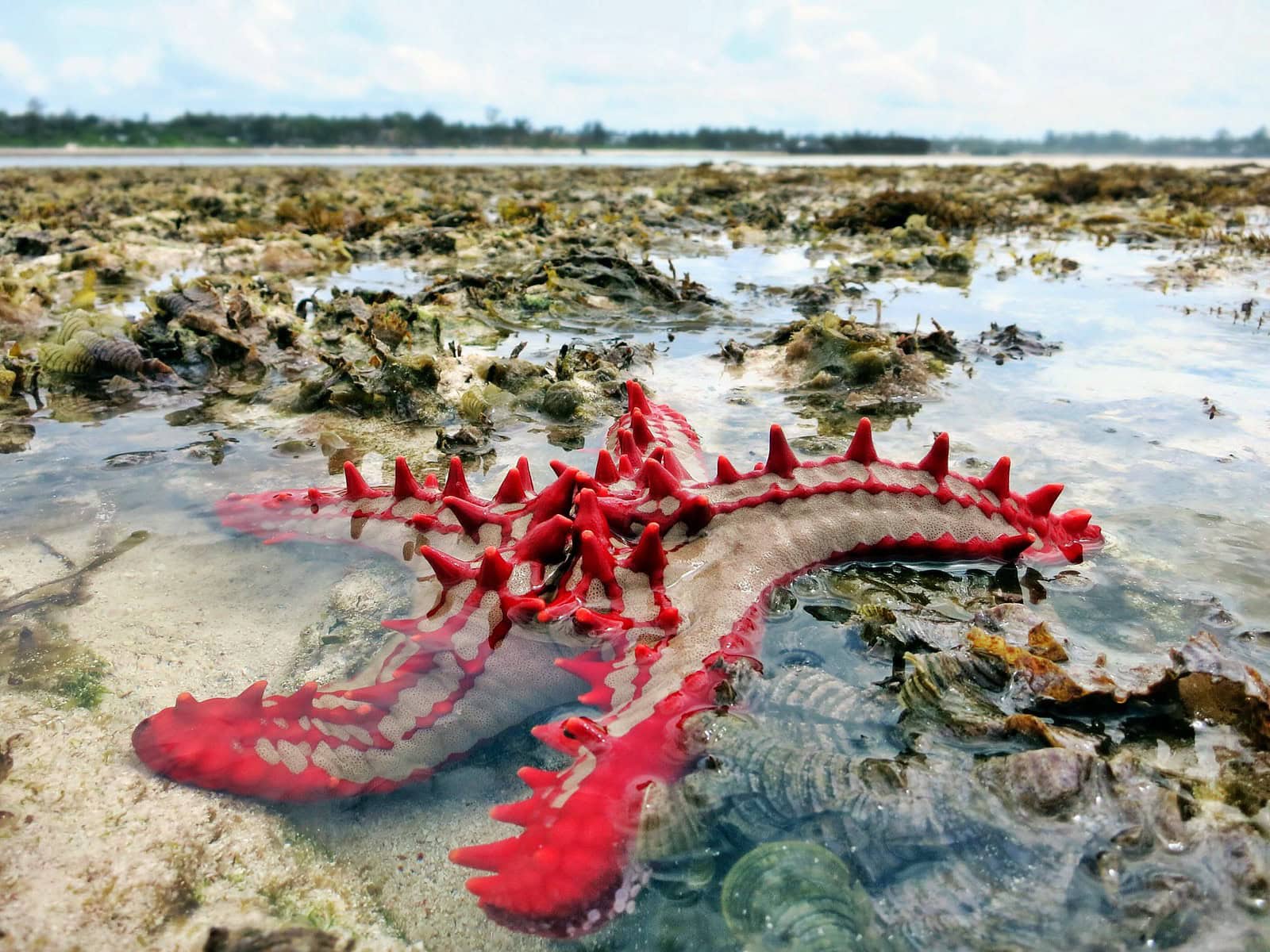
For water-based rest days: diving and snorkelling in Watamu Marine National Park is excellent, especially during the transition months when the reef is at its calmest. The turtle rehabilitation centre at the park is worth the visit. Glass-bottom boat trips over the reef are easy to organise from the beach, and dhow sunset cruises on Mida Creek are a solid way to spend an evening without kite gear.
Back in the village, fresh fish, crab, and lobster are cheap and everywhere. The Italian influence in the area is real and the pizza is genuinely good, better than you’d expect from a small Kenyan fishing village. Friday nights at Ocean Sports, Saturday cocktails at Pili Pan, and Wednesday beach parties at Papa Remo are the social anchors of the week.